
Review
Some games try to impress you with spectacle right away. Choicer Voicer takes a more curious route: it asks you to listen, weigh options, and build momentum through the sound of your decisions. I approached it like a veteran player who has seen one too many polished but hollow releases, and I came away pleasantly surprised. This is not a loud blockbuster. It is a compact, clever experience that gets more interesting the longer you sit with it. At its core, Choicer Voicer is about making choices...

Сhoicer Voicer
Some games try to impress you with spectacle right away. Choicer Voicer takes a more curious route: it asks you to listen, weigh options, and build momentum through the sound of your decisions. I approached it like a veteran player who has seen one too many polished but hollow releases, and I came away pleasantly surprised. This is not a loud blockbuster. It is a compact, clever experience that gets more interesting the longer you sit with it.
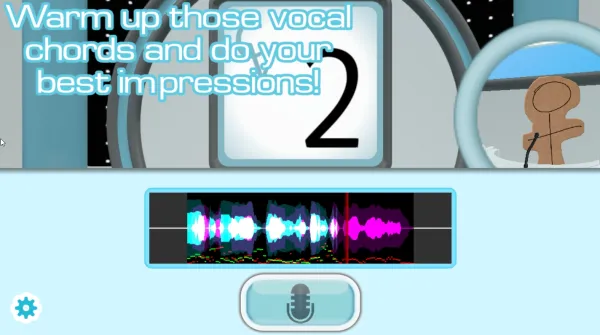
At its core, Choicer Voicer is about making choices with voice-driven input and watching the game react in real time. That idea sounds simple, but the execution gives it a distinct identity. Instead of treating input as a passive menu item, the game turns your spoken decisions into a central mechanic. That alone sets it apart from most indie releases I’ve played this year, especially on platforms where innovation often gets buried under repetition.
First Impressions and Why It Works
The opening hours do a solid job of teaching the rhythm. You speak, the game interprets, and the world shifts according to what you picked. The pleasure comes from consistency and consequence. I appreciated how quickly Choicer Voicer establishes a feedback loop that feels human rather than mechanical. When a game built around voice interaction lands, it creates a sense of presence that button-heavy titles rarely match.
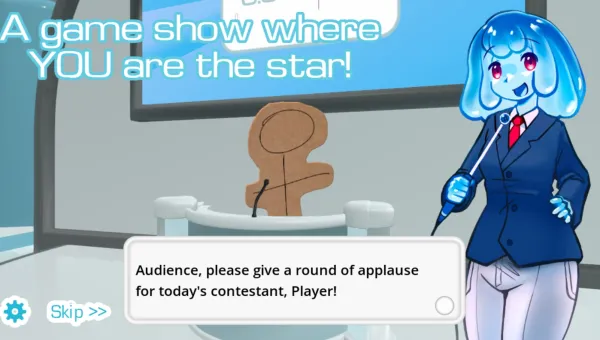
The presentation supports that idea well. Visuals are clean without being sterile, and the audio design does a lot of heavy lifting. Layered voice cues, subtle environmental sounds, and responsive effects all reinforce the feeling that your words matter. I wouldn’t call it flashy, but it is focused. That focus gives the whole project a confidence many bigger games can’t fake.
Gameplay That Rewards Attention
The main appeal here is not twitch reflexes. It is observation, timing, and the willingness to understand how the systems connect. If you enjoy experimentation, you will probably have a good time testing different dialogue paths and outcomes. I found myself replaying scenarios just to see how the structure bent around specific phrasing. That kind of curiosity is usually a good sign.
Choicer Voicer also has enough variation to keep the format from going stale too quickly. Some segments are more narrative-heavy, while others lean into challenge-based sequences that ask you to react under pressure. It is not an endless sandbox, but there is enough texture to make a repeat session feel worthwhile. In a market where many free experiences feel thin after ten minutes, this one shows more ambition than expected.
Presentation, Tone, and Identity
One of the smartest aspects of Choicer Voicer is that it knows what kind of mood it wants. It doesn’t drown everything in irony, and it doesn’t overexplain itself either. That restraint helps the game feel more mature than a lot of trend-chasing releases. The tone is playful, but there is real design discipline underneath it.
The interface deserves credit too. It is easy to read, fast to navigate, and built with enough clarity that you can focus on the actual experience rather than fighting the menus. That matters more than people admit, especially in games where speech recognition or choice parsing can become frustrating if the structure is messy. Here, the flow stays mostly smooth.
There’s also a nice sense of pacing. The game knows when to speed up and when to let a moment breathe. That pacing is one of the reasons I’d recommend it to players who usually bounce off novelty titles. Choicer Voicer has a modest scope, but it uses that scope well. It feels designed by people who understand that a clever hook still needs strong rhythm to hold attention.
What I Liked Most
The biggest strength is the interaction model itself. Speaking your choices gives the game personality, and it encourages you to think about options in a less robotic way. That may sound minor, but it changes the whole feel of the session. You’re not just selecting from a list; you’re participating in a system that wants your input to sound like intent.
I also liked the replay value. Even after a full run, there was enough curiosity left in the design to justify another pass. Different choices can unlock different scenes, alter reactions, or expose branches you’d miss on a casual playthrough. For a game at this scale, that’s important. It gives the experience beyond one-and-done appeal.
The soundwork deserves special mention. Good voice-focused games need the audio to be sharp, and Choicer Voicer generally gets that right. Effects are crisp, the response timing is reliable, and the presentation never becomes cluttered. When the game asks you to install your attention into its rhythm, it rewards that investment with clean feedback.
Where It Could Be Better
No honest review should pretend everything is flawless. Choicer Voicer can feel limited if you expect a massive content pool or complex progression systems. Some players may wish for more varied environments, stronger long-form rewards, or a more ambitious endgame. I get that. The concept is strong enough that you can imagine a larger version with even more branches and deeper mechanical layers.
There are also moments where voice interpretation can feel a little too strict, depending on phrasing and setup. That’s not unique to this game, but it is something to keep in mind if you want a perfectly frictionless experience. The good news is that the overall design is forgiving enough that these hiccups don’t derail the whole session.
As for cheats and mods, this is not the kind of game that really thrives on heavy modification. The fun comes from the intended structure, not from bending it into something entirely different. If anything, I’d recommend first experiencing the game as designed before looking for any fan-made tweaks. For a title built around choices and response logic, the original balance matters.
Who Should Play It
Choicer Voicer is best suited to players who enjoy inventive indie ideas, voice-driven interaction, and shorter games with replay potential. If you like to play something unusual between larger titles, this fits that slot nicely. It also works well for people who want a free or low-commitment download and aren’t expecting a giant production. The game respects your time, which is already a point in its favor.
It may also appeal to streamers or content creators, since the concept naturally creates unpredictable moments. I can easily see an audience enjoying the different outcomes and the occasional awkward or surprising response. That doesn’t make it a gimmick; it simply means the premise has enough personality to stay entertaining in public.
If your gaming habits lean toward polished action, huge open worlds, or competitive play, this will likely feel smaller than your usual picks. But small does not mean forgettable. Choicer Voicer makes a clear creative statement and backs it up with competent execution.
Final Verdict
Choicer Voicer is one of those games that earns respect by doing one unusual thing well. It doesn’t overpromise. It doesn’t bury its idea under excessive systems. It simply takes a strong concept, builds a clean framework around it, and lets the player explore the consequences. As someone who has spent years installing, testing, and abandoning more digital distractions than I care to admit, I appreciate a game that knows exactly what it is.
It won’t be for everyone, especially if you need high complexity or marathon-length content. But if you want something fresh, focused, and easy to return to, it is worth a download. The experience feels thoughtful, slightly experimental, and more polished than its size suggests. That combination is rare enough to stand out on any platform where smart indie work is fighting for attention.
Choicer Voicer is not trying to be the biggest game in the room. It is trying to be the most distinctive one. In my book, that is a far better goal.
How to download Choicer Voicer
Availability & Launch: Choicer Voicer is typically accessed through its official store page or publisher site, and depending on the release window it may be free or offered as a paid download. Check the listing for the current launch status before you install.
Platforms: Confirm supported platforms on the game’s official page before you play. If a version is not available on PC, Mac, or Android, you may need cloud access, a compatible emulator, or a browser-based option if provided. Unsupported platforms are not guaranteed to run the game natively.
Install: Open the official page, choose the correct platform build, download the file, and follow the on-screen install steps. On mobile, install through the store listing if available; on PC or Mac, run the installer and complete the setup prompts.
System Requirements: For PC or Mac, expect modest indie-level specs, usually a recent processor, 4 GB of memory, and stable storage space. For Android, a modern device with updated software is generally enough.
Cheats / Mods: Cheats and mods are not usually part of the standard experience, and unofficial modifications may affect stability. Use only trusted sources if any fan content exists.
Unblocked Access: Availability in restricted environments like school or work depends on network filters and platform access. If the game is browser-based or hosted on a safe-approved site, it may work; otherwise, unblocked play is not guaranteed.
Pros:
- Innovative voice-driven choice mechanic that makes decisions feel more immersive
- Replay value is strong thanks to branching outcomes and alternate scenes
- Clean, focused presentation that keeps attention on the core experience
- Sound design and feedback timing are effective and responsive
- Easy to pick up, with a fast and intuitive interface
- Shorter scope makes it ideal for quick sessions or as a break from larger games
- The game has a distinct identity and stands out from more generic indie titles
- Works well for players who enjoy experimentation and seeing how choices change the story
Cons:
- Content scope may feel limited for players seeking a long or expansive game
- Voice recognition can occasionally be strict depending on phrasing or setup
- Not much for players who want deep progression systems or high mechanical complexity